Give the tag a specific job
A hang tag can introduce a brand, identify a size or variant, display a price or carry a short product story. Trying to give every side every possible job usually creates a crowded result. Decide what the shopper needs immediately and what can be secondary. For an apparel collection, that might mean brand and product reference on the front with approved price or material information on the reverse. A gift accessory or furnishing product may need a different hierarchy.
Match the format to the information
Compare a flat tag with a folded construction before choosing a shape. A folded tag offers more information space but brings extra folds and attachment considerations. Keep the hole far enough from the cut edge for the intended construction and leave a clear area around it in the artwork. Confirm the string or attachment method alongside the tag rather than adding it at the end. The tag should hang in a way that lets the important face remain useful.
Choose stock and finish for the brand
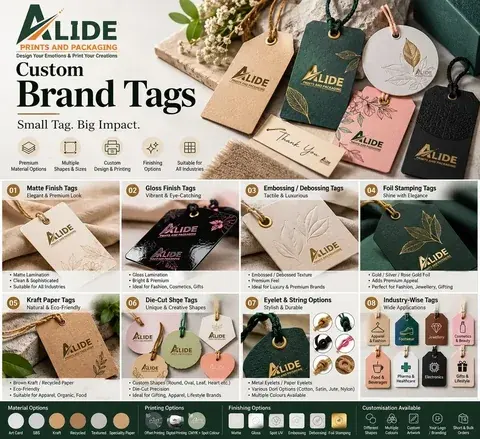
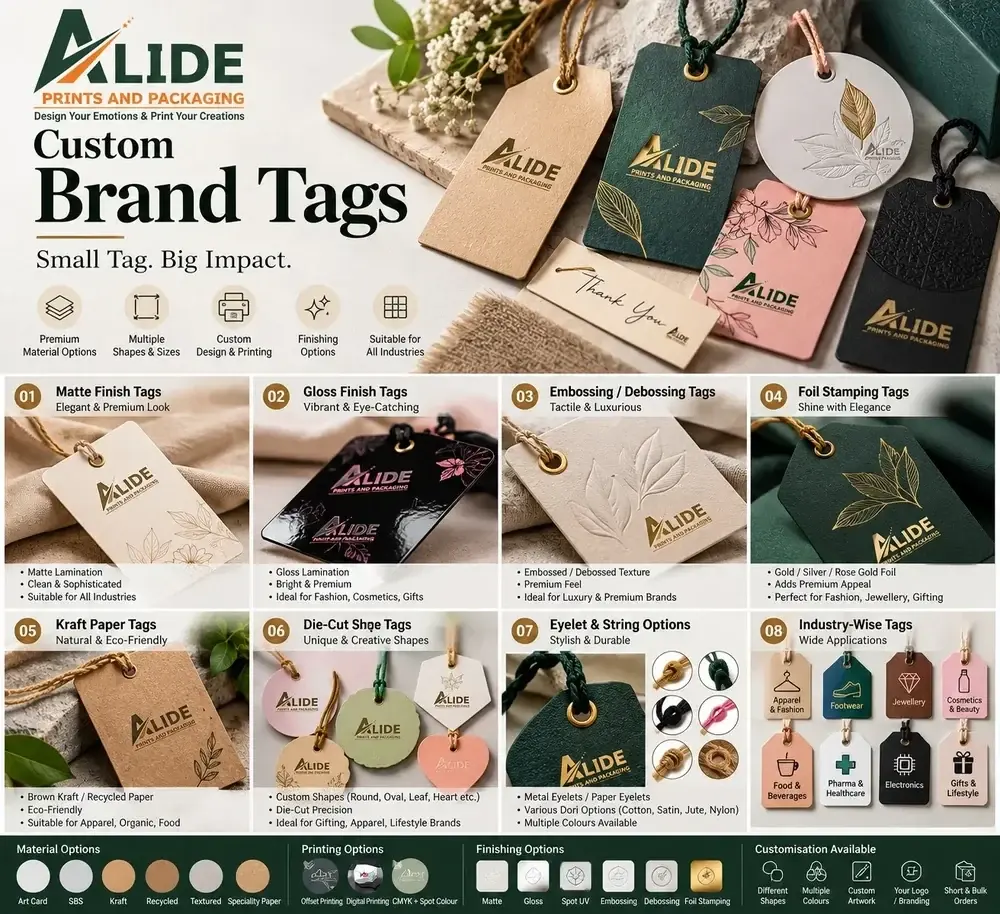
Paper feel and stiffness influence presentation, but a premium effect does not require every embellishment at once. Artcard can give a smooth print surface, while kraft or textured stock produces a different visual character. The actual material and print process should be reviewed for colour and small text. If selective foil, embossing or lamination is desired, identify the exact area. Keep the product in view: the tag should complement a garment, pair of shoes or accessory rather than overwhelm it.
Reserve readable data areas
When prices, product codes or barcodes change between items, plan the variable area early. Provide the final data and confirm whether it will be printed during the main production run or added later. Barcodes and QR codes need sensible size and clear surrounding space. Check a real printed proof with the intended scanner or ordinary phone, not only a digital artwork preview. Required price, care or product wording should be approved by the brand's responsible team; a tag design is not a substitute for checking the information.
Review the tag on the actual product
Hang a structural or printed sample on a representative item and examine how the string, shape and tag weight behave. Check whether corners catch on fabric, whether the tag obscures a useful product detail and whether text can be read without awkward handling. Look at it under the sort of lighting used in the shop. A tag that feels balanced by itself may appear too large against a small accessory or too slight against a substantial garment.
Build a reusable ordering record
Your final brief should contain the tag's finished dimensions, shape, stock, number of print faces, attachment, quantity per artwork version and the approved finish. Include the destination city and PIN code so dispatch arrangements can be discussed. Keep a record of the approved artwork and any variable-data rules for later collections. Alide can help discuss the print and construction choices; the quotation should confirm material, quantity, sample arrangements and timing for the actual order.
Turn the guide into a clearer brief.
Share the format, quantity, artwork status, intended use and destination PIN. Material suitability, pricing and schedule are confirmed in the quotation.
Discuss your requirement